Firefly Internet Phone for Windows- A Look Back at VoIP Communication
Before Zoom calls became a verb, before FaceTime integrated into every iPhone, before WhatsApp and Telegram offered free audio, there was a wave of pioneering Voice over Internet Protocol (VoIP) applications. These early services allowed users to make phone calls using their internet connection instead of traditional telephone lines. They promised cheaper—sometimes free—communication across cities, countries, and continents.
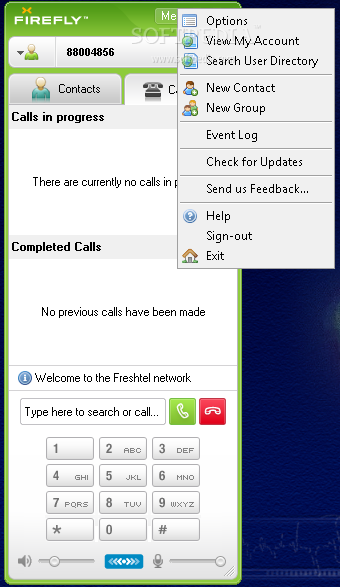
Firefly Internet Phone was one such service. Developed by Freshtel, Firefly offered Windows users the ability to make free calls to other Firefly and partner network users worldwide. It also provided instant messaging, voicemail, competitive rates for calling traditional landlines and mobile phones, and advanced features like conference calling and call transfer.
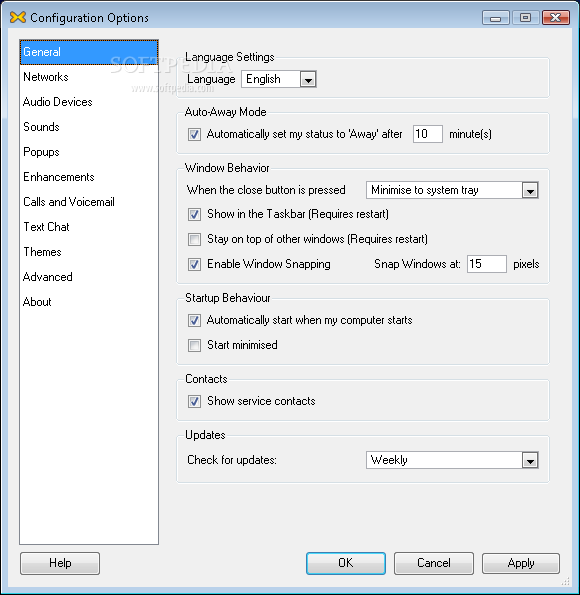
Published on CNET Download on February 26, 2026 (with version 3.0.2), Firefly Internet Phone represents an earlier era of VoIP communication. This article explores what Firefly offered, how it worked, and its place in the history of internet telephony.
Firefly Internet Phone for Windows – Complete Guide to This VoIP Service
What Was Firefly Internet Phone?
Firefly Internet Phone was a software application for Microsoft Windows that enabled voice communication over the internet. It was developed by Freshtel, an Australian telecommunications company that provided VoIP services in the 2000s and early 2010s. Firefly was part of a network that included partner services like Freshtel Internet Phone UK and Tesco Internet Phone (the supermarket chain’s foray into VoIP).
The Core Concept:
Firefly allowed two types of calls:
- App-to-app calls (free): Calls between two users who both had Firefly installed. These used internet bandwidth only and did not incur per-minute charges.
- App-to-phone calls (paid): Calls from Firefly to traditional telephone numbers (landlines or mobile phones). These used the public telephone network for the final connection and had competitive per-minute rates.
Key Information from the Source:
- Version: 3.0.2
- Platform: Windows (2000, XP, Vista, 10)
- Publication Date: February 26, 2026
- Total Downloads: 6,839
- Additional Requirements: Broadband Internet connection
Key Features of Firefly Internet Phone
Based on the CNET listing and developer’s description, Firefly offered a robust set of features for its time.
1. Free Calls to Firefly and VoiceDot Users Worldwide
The headline feature: free voice calls to any other Firefly user, anywhere on the planet. This also extended to users on partner networks within the VoiceDot ecosystem, including the UK and Tesco-branded versions. For international calls between friends, family, or colleagues, this represented significant savings over traditional long-distance rates.
2. Instant Messaging
In addition to voice calling, Firefly included text-based instant messaging. This was common for VoIP clients of the era—Skype offered similar functionality. IM allowed quick text exchanges without needing to initiate a full voice call.
3. Voicemail Box for Missed Calls
Firefly provided a voicemail system. When a user was offline, busy, or chose not to answer, callers could leave a voice message. The voicemail box allowed users to retrieve messages at their convenience. This was essential because many early VoIP users did not keep the application running 24/7.
4. Competitive Rates for Traditional Phone Calls
For calling landlines and mobile phones (Public Switched Telephone Network or PSTN numbers), Firefly charged per-minute rates. The developer’s description claims “extremely competitive calling rates.” User reviews, however, suggested the rate structure could be confusing or limited to certain geographic areas.
5. Supports Multiple Calls, Conference Calls, and Call Transfer
Version 3.0.2 added advanced call handling features:
- Multiple calls simultaneously: Users could have several active calls at once (e.g., one on hold while talking to another).
- Conference calling: Three or more parties could join a single voice call.
- Call transfer: A user could redirect an ongoing call to another Firefly user or telephone number.
These features were sophisticated for a free consumer VoIP application in the 2000s.
System Requirements and Compatibility
Firefly Internet Phone was designed for Windows systems of its era.
| Requirement | Detail |
|---|---|
| Platform | Windows |
| Supported OS | Windows 2000, XP, Vista, Windows 10 |
| Additional Requirements | Broadband Internet connection (not dial-up) |
| Version | 3.0.2 |
Broadband Required: The explicit “Broadband Internet” requirement indicates that Firefly needed a relatively fast, always-on connection. Dial-up modems (56kbps) would not provide sufficient bandwidth or latency for acceptable voice quality.
Windows 10 Support: The listing includes Windows 10, which is notable. This suggests the software was updated or maintained as late as the Windows 10 era (2015 onwards). However, given the publication date of February 26, 2026, on CNET, this may be a republished listing of older software.
No Mac, Linux, or Mobile: Firefly was Windows-only. Users on other platforms would need alternative VoIP solutions.
Popularity and User Feedback
Download Statistics:
- Total Downloads: 6,839
- Downloads Last Week: 1 (at the time of the listing)
Analysis:
- Moderate Niche Success: 6,839 downloads is respectable for a specialized VoIP tool. It is far below giants like Skype (millions), but indicates a dedicated user base.
- Declining Interest: Only 1 download in the last week suggests the software is largely abandoned or irrelevant to modern users.
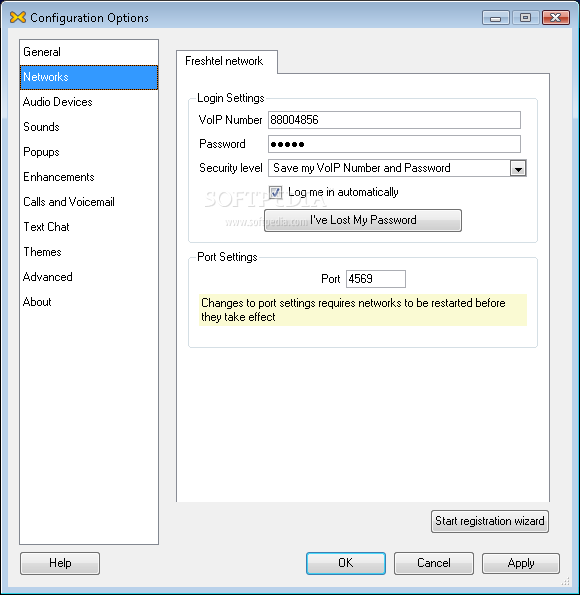
User Review (1/5 Stars): A user identified as “andrewdpham3” left a 1-star review with the comment: “Only the program is free. Low rate. You need to pay for anywhere outside of some city outside of Australia.”
What This Review Reveals:
- Free software, not free calls to phones: The user expected free calls to traditional numbers but discovered that only app-to-app calls were free.
- Geographic limitations: The “some city outside of Australia” complaint suggests Firefly’s paid calling rates may have been favorable only within Australia (Freshtel’s home market). International calls may have been expensive or unavailable.
- Misleading expectations: Users who did not read carefully assumed “free internet phone” meant entirely free calling. The reality—free only to other Firefly users—disappointed some.
Editors’ Review: The CNET editors provided a balanced pros/cons list. The only listed con: “Requires internet connection for app-to-app calls.” This is a trivial con (of course VoIP needs internet), suggesting the editors struggled to find genuine drawbacks.
How Firefly Compared to Competitors
Firefly entered a crowded VoIP market. Here is how it stacked up against major competitors of its era.
| Feature | Firefly | Skype (2000s) | Vonage | Google Voice (later) |
|---|---|---|---|---|
| Free app-to-app calls | Yes | Yes | No | Yes (to US) |
| Free calls to phones | No | No (SkypeOut paid) | No | Yes (to US initially) |
| Instant messaging | Yes | Yes | No | No |
| Voicemail | Yes | Yes (paid) | Yes | Yes |
| Conference calling | Yes (version 3.0.2) | Yes | Yes | Yes |
| Call transfer | Yes | No | Yes | No |
| Platform | Windows only | Windows, Mac, Linux, mobile | Hardware device + Windows | Web/browser |
| Business model | Freemium (pay for PSTN calls) | Freemium | Monthly subscription | Freemium |
Firefly’s Unique Angle: Integration with VoiceDot partners (Tesco, Freshtel UK) gave it potential reach into non-Australian markets. A Firefly user could call a Tesco Internet Phone user in the UK for free, even though they were on different branded services.
Why Skype Won: Skype offered cross-platform support (Windows, Mac, Linux, and eventually mobile), better brand recognition, and aggressive marketing. It also introduced video calling. Firefly remained Windows-only and never achieved the same scale.
The Decline of Desktop VoIP and Rise of Mobile
Firefly Internet Phone belongs to a specific era: the mid-to-late 2000s, when broadband internet became common but smartphones were not yet ubiquitous. During this time, making a voice call over the internet meant sitting at a computer with a headset or USB phone.
Then (c. 2005-2010):
- You needed a computer running Windows.
- You needed a broadband connection (cable or DSL).
- You needed a microphone and speakers or a headset.
- Calls were often lower quality than traditional phone lines due to latency and packet loss.
Now (c. 2026):
- Mobile apps (WhatsApp, Signal, Telegram, FaceTime, Google Meet) offer free high-quality voice and video calls from anywhere with cellular or Wi-Fi.
- Desktop calling is a secondary feature, not the primary method.
- Traditional phone numbers are increasingly irrelevant for person-to-person communication.
Firefly’s Obsolete Value Proposition: Today, an app that offers “free calls to other app users” is not special—every messaging app does that. The competitive calling rates to traditional phones are less relevant as landlines disappear and mobile plans include unlimited domestic minutes.
Can You Still Use Firefly Today?
The short answer is probably not, and you should not try.
Likely Issues:
- Server shutdown: Freshtel’s Firefly service has almost certainly been discontinued. Even if you install the software, it will not connect to any active network for app-to-app calls or PSTN termination.
- Security risks: Abandoned software lacks security updates. Installing it on a modern Windows 10 or Windows 11 machine could expose you to vulnerabilities.
- Incompatibility: While the listing includes Windows 10, the software may have compatibility problems with modern network configurations (NAT traversal, firewalls, IPv6).
- No support: Even if you get it running, there is no customer support, no billing for paid calls, and no community.
Recommendation: Do not download or install Firefly Internet Phone. It is a historical artifact, not a functional communication tool. Use modern alternatives instead.
Modern Alternatives to Firefly Internet Phone
If you need free or low-cost calling, these modern options are vastly superior.
| Service | Free calls? | Platform | Best Feature |
|---|---|---|---|
| Free app-to-app, including video | Windows, Mac, iOS, Android | Encrypted, ubiquitous | |
| Signal | Free app-to-app, including video | Windows, Mac, iOS, Android | Strong privacy focus |
| Telegram | Free app-to-app, including video | Windows, Mac, iOS, Android | Cloud-based, fast |
| Google Meet | Free (up to 60 min for 3+ participants) | Web, mobile | No app required for participants |
| Zoom | Free (40 min limit for 3+ participants) | Windows, Mac, iOS, Android | Industry standard for meetings |
| Skype | Free app-to-app; paid calls to phones | All platforms | Still offers PSTN calling |
| Google Voice | Free calls to US/Canada numbers; low international rates | Web, iOS, Android | Real phone number |
For Calling Traditional Phones: If you need to call landlines or mobile numbers (e.g., to reach a business without a VoIP presence), consider:
- Google Voice (free to US/Canada, low rates elsewhere)
- Skype Credit (pay-as-you-go for PSTN calls)
- Local phone service (your mobile or landline plan)
Frequently Asked Questions (FAQs)
1. Is Firefly Internet Phone still working in 2026?
Almost certainly not. The service (servers, user directory, PSTN gateway) has likely been shut down for years. While the software may install, it will not connect to any active network. Do not rely on it for communication.
2. Was Firefly truly free?
Free for calls to other Firefly and VoiceDot users. Calls to traditional phone numbers (landlines and mobiles) required payment on a per-minute basis. The software itself had no purchase cost.
3. What was VoiceDot?
VoiceDot was a network or protocol that allowed different VoIP providers to interconnect. Firefly, Freshtel Internet Phone UK, and Tesco Internet Phone were VoiceDot partners. This meant a Firefly user could call a Tesco user for free, even though they used different branded applications.
4. Why did Firefly fail while Skype succeeded?
Several reasons: Skype launched earlier (2003), supported multiple platforms (Windows, Mac, Linux), introduced video calling, and benefited from massive brand recognition after eBay acquired it in 2005. Firefly remained Windows-only and never achieved the same network effect.
5. Are there any security risks to downloading Firefly now?
Yes. Abandoned software often contains unpatched vulnerabilities. Installing Firefly on a modern Windows PC could expose your system to malware or remote exploits. Additionally, downloading from third-party archives (if the official source is gone) risks bundled adware. Avoid it.
Conclusion
Firefly Internet Phone represents an important stepping stone in the history of internet communication. In its prime, it offered Windows users a way to bypass expensive long-distance phone companies, connecting with friends and colleagues worldwide for free (app-to-app) or at low rates (to traditional phones). Features like instant messaging, voicemail, conference calling, and call transfer were competitive for a free application of its era.
However, Firefly was ultimately a footnote. It never achieved the cross-platform dominance of Skype, nor did it survive the transition to mobile-first communication. Today, in 2026, Firefly is obsolete. The software is abandoned, the servers are dark, and the value proposition has been superseded by dozens of modern apps that offer higher quality, better security, and seamless mobile integration.
For historians of technology, Firefly is an interesting case study in VoIP competition. For everyone else, it is a reminder to never rely on closed-source, proprietary communication tools that can disappear when their parent company moves on. Use modern, open, or widely-supported standards instead—and appreciate that you can now make free video calls to almost anyone on the planet from a device in your pocket. That was Firefly’s promise, partially realized, and later perfected by others.