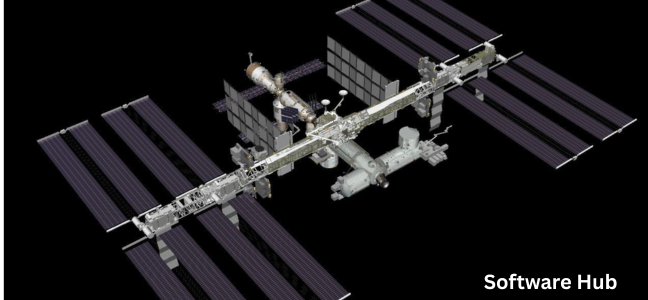
Space Station 3D – To Space Exploration Software
Have you ever dreamed of floating through the International Space Station, gazing at Earth from orbit, or piloting a spacecraft through the cosmos? For decades, space has captivated the human imagination. Today, software like Space Station 3D brings that experience to your desktop, allowing anyone with a computer to explore the final frontier.
While the specific product page on CNET Download is currently unavailable, the concept of “Space Station 3D” represents a category of educational and simulation software that lets users explore orbital habitats, understand space science, and experience the wonder of spaceflight from their own homes.
This comprehensive guide covers everything you need to know about space station simulation software, including features to look for, educational benefits, popular alternatives, and how to choose the right space exploration tool for your needs.
What Is Space Station 3D Software? An Overview
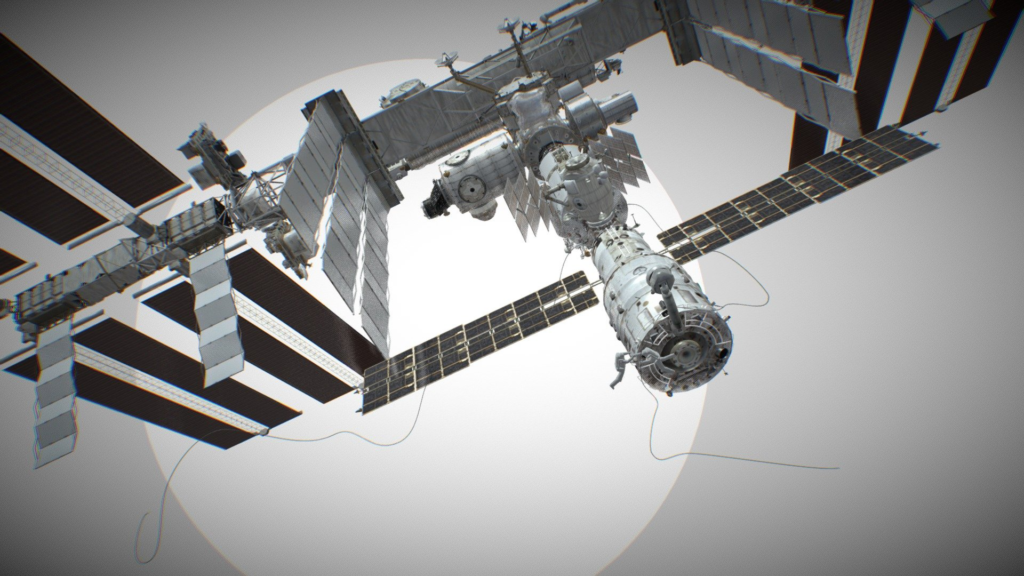
Space Station 3D typically refers to a category of educational or entertainment software that provides a three-dimensional, interactive model of a space station—most commonly the International Space Station (ISS). Users can navigate through modules, view Earth from orbit, learn about space science, and sometimes even conduct virtual experiments.
These applications range from simple screensavers and educational tools to complex simulators used in museums and planetariums. Some are designed for casual exploration, while others offer detailed scientific accuracy for students and educators.
Common features of space station software:
- 3D interactive models – Explore space station modules in full 3D
- Earth views – See our planet from orbit (often using real satellite imagery)
- Educational content – Learn about space science, microgravity, and daily life on the ISS
- Virtual tours – Guided walkthroughs of space station sections
- 360-degree views – Look around in any direction
- Realistic soundscapes – Ambient sounds of life support systems and communications
Who is space station software for?
- Students and educators – Bringing space science to life
- Space enthusiasts – Anyone fascinated by orbital habitats
- Casual users – Those who enjoy screensavers or background visuals
- Museum and planetarium visitors – Interactive exhibits
- Aspiring astronauts – Understanding the environment they may one day occupy
The Educational Value of Space Station Simulations
Bringing Abstract Concepts to Life
Space is difficult to comprehend from textbooks alone. The concept of microgravity, the layout of the ISS, the scale of Earth from orbit—these are abstract ideas that become concrete when experienced in 3D.
A well-designed space station simulation allows students to:
- “Walk” through the ISS modules (Zvezda, Destiny, Kibo, Columbus)
- Understand how astronauts live, work, and sleep in microgravity
- See the Earth rotating beneath the station (16 sunrises/sunsets per day)
- Learn about space experiments conducted in zero-g
Inspiring STEM Careers
Studies have shown that exposure to space-related content increases interest in science, technology, engineering, and mathematics (STEM) fields. A child who explores a 3D space station might become the engineer who designs the next Mars habitat or the scientist who discovers extraterrestrial life.
Teaching Geography from Orbit
One of the most powerful aspects of space station software is the view of Earth. Students can:
- Identify continents, countries, and oceans from space
- Understand weather patterns (hurricanes, cloud formations)
- See city lights at night (if simulated)
- Learn about orbital mechanics and why the ISS follows a specific path
Key Features to Look for in Space Station Software
If you are searching for a Space Station 3D application, whether the specific CNET product or an alternative, these are the features to prioritize:
1. Accurate 3D Models
The software should accurately represent the space station’s modules, solar arrays, radiators, and docking ports. The best applications use NASA CAD data or laser scans to ensure dimensional accuracy.
What to look for:
- Externally visible modules named correctly (e.g., Node 1 “Unity,” Node 2 “Harmony”)
- Internally detailed modules with recognizable equipment (sleeping quarters, galley, exercise equipment, experiment racks)
- Proper orientation of solar arrays (they rotate to track the sun)
2. Realistic Earth Views
The view of Earth is the centerpiece of any space station experience. High-quality software uses satellite imagery (NASA’s Blue Marble, USGS data) to create a realistic representation of our planet.
Features to look for:
- High-resolution textures (as much detail as your system can handle)
- Day/night terminator (the line between light and dark)
- City lights at night (if simulating nighttime passes)
- Clouds and weather patterns
- Sun glint on oceans
3. Educational Content
The best space station software teaches as it entertains. Look for:
- Informative tooltips (click on an object to learn its name and function)
- Guided tours with narration
- Quizzes or interactive challenges
- Links to further resources (NASA website, YouTube videos)
4. Navigation Controls
Intuitive navigation is essential for usability. Good controls allow you to:
- Rotate the view (look up, down, left, right)
- Zoom in and out (from external view to internal detail)
- “Fly” or “walk” through modules (first-person perspective)
- Teleport to specific areas (e.g., click on a module name to go there)
5. Realism Features
For space enthusiasts, realism matters. Advanced software includes:
- Accurate orbital speed (the ISS orbits at approximately 17,500 mph / 28,000 kph)
- Real-time position tracking (where is the ISS right now?)
- Current crew information (who is aboard, their photos, their missions)
- Live data feeds (temperature, power consumption, oxygen levels) – if connected to the internet
6. Platform Compatibility
Ensure the software works on your operating system:
- Windows (most common for older educational software)
- macOS (less common, but available)
- Web-based (runs in browser, no installation)
- Mobile (iOS/Android apps for on-the-go exploration)
7. Performance Requirements
3D space station software can be demanding. Check system requirements:
- Minimum: Integrated graphics, 4GB RAM, dual-core processor
- Recommended: Dedicated GPU (NVIDIA/AMD), 8GB+ RAM, quad-core processor
Older software (like the CNET product, likely from the 2000s) will run on almost any computer. Newer applications require modern hardware.
Popular Space Station Software Alternatives
If the specific “Space Station 3D” download is unavailable, these alternatives provide similar or better functionality:
| Software | Platform | Key Features | Price | Best For |
|---|---|---|---|---|
| ISS 3D Viewer (NASA) | Web | Official NASA models, real-time tracking, educational content | Free | Educational use, students |
| Space Engine | Windows | Entire universe (not just ISS), procedural generation, stunning graphics | Free (basic) / Paid (pro) | Space enthusiasts, exploration |
| Kerbal Space Program | Win/Mac/Linux | Build and launch your own spacecraft, realistic orbital mechanics | Paid | Gamers, STEM education |
| Universe Sandbox | Win/Mac | Physics-based space simulator, gravitational interactions | Paid | Physics students, educators |
| Google Earth (Space view) | Win/Mac/Web | Earth from orbit, ISS tracking layer | Free | Casual users |
| Celestia | Win/Mac/Linux | Real-time 3D universe simulation, extensive add-ons | Free | Astronomy enthusiasts |
| ISS Live (App) | iOS/Android | Live feed from ISS cameras, crew updates | Free | Mobile users, casual |
NASA’s Official Resources
NASA offers several free, high-quality space station resources that are better than most commercial products:
ISS 3D Model (NASA Website):
- Interactive 3D model of the ISS
- Clickable modules with descriptions
- Real-time position tracking
- Educational content for all ages
- Available at NASA’s official website (www.nasa.gov)
NASA App:
- Live ISS tracking on a world map
- Photos and videos from space
- Astronaut updates
- Launch schedules
- Available for iOS, Android, and Windows
ISS Internal Tour (YouTube/VR):
- 360-degree videos of ISS interiors
- Narrated by astronauts
- Works with VR headsets or standard browsers
How to Choose the Right Space Station Software for Your Needs
For Educators and Students
Priority: Educational accuracy, curriculum alignment, classroom usability
Recommendation: Use NASA’s official ISS 3D viewer or the NASA app. These are free, accurate, and designed for educational use. Supplement with lesson plans from NASA’s STEM engagement site.
Features needed:
- Informative tooltips and labels
- Guided tours
- Ability to print or screenshot for assignments
- No distracting gamification (or optional)
For Casual Home Users
Priority: Ease of use, visual appeal, low cost (preferably free)
Recommendation: Google Earth (space view) or NASA’s ISS Live app. These are simple, beautiful, and require no technical knowledge.
Features needed:
- One-click navigation
- High-quality visuals (Earth views)
- Screensaver mode (optional)
For Space Enthusiasts
Priority: Realism, detail, immersion
Recommendation: Space Engine (free version is excellent) or Universe Sandbox. These offer not just the ISS but the entire universe.
Features needed:
- Real-time orbital tracking
- Accurate lighting (sun, Earth shine)
- High-resolution textures
- Free-camera mode (fly anywhere)
For Gamers Who Want to Learn Orbital Mechanics
Priority: Fun, challenge, educational depth
Recommendation: Kerbal Space Program. While not specifically an ISS simulator, KSP teaches orbital mechanics more effectively than any other software. You can build your own space station, dock modules in orbit, and learn why orbital rendezvous is difficult.
Features needed:
- Realistic physics (simplified but accurate)
- Building and assembly
- Docking challenges
- Mod support (ISS replica mods available)
For Museum or Planetarium Exhibits
Priority: Stability, visual impact, large-screen support
Recommendation: Space Engine (highest visual fidelity) or Unreal Engine based custom solutions. Many planetariums use custom-built software for dome projections.
Features needed:
- Support for unusual display configurations (multi-monitor, domes)
- High performance (60+ FPS)
- Professional support (for commercial products)
The International Space Station: A Brief Overview
To appreciate any space station software, it helps to understand the real thing.
Basic Facts about the ISS
| Fact | Detail |
|---|---|
| First module launched | November 20, 1998 (Zarya) |
| Length | 109 meters (358 feet) – about the size of a football field |
| Mass | Approximately 450,000 kg (1,000,000 lbs) |
| Crew capacity | 6-7 astronauts/cosmonauts |
| Orbit altitude | Approximately 400 km (250 miles) |
| Orbital speed | 28,000 km/h (17,500 mph) |
| Orbit time | 90 minutes (16 sunrises/sunsets per day) |
| Countries involved | USA, Russia, Japan, Canada, and 11 European nations |
Major Modules
- Zarya (Functional Cargo Block): First module, provides power and propulsion
- Unity (Node 1): Connects US and Russian segments
- Zvezda (Service Module): Living quarters, life support, propulsion
- Destiny (US Laboratory): Primary US research module
- Kibo (Japanese Experiment Module): Japanese research facility (includes external platform)
- Columbus (European Laboratory): European Space Agency research module
- Tranquility (Node 3): Contains life support, sleeping quarters, and the famous Cupola (window module)
The Cupola
The Cupola is a seven-window module that provides a panoramic view of Earth and space. It is the most photographed part of the ISS and a favorite subject of space station software. In good simulations, you can “look through” the Cupola windows to see Earth below.
Frequently Asked Questions (FAQs)
1. Is “Space Station 3D” software still available for download?
The specific CNET Download page appears to be temporarily unavailable. However, many high-quality alternatives (listed above) are readily available. Try NASA’s official ISS 3D viewer, which is free and works in your web browser.
2. Do I need a powerful computer to run space station software?
It depends on the software. Older educational software (from the early 2000s) will run on almost any computer. Modern, high-fidelity simulators like Space Engine require a dedicated graphics card (NVIDIA/AMD) and at least 8GB of RAM. Check system requirements before downloading.
3. Can I see the real ISS from my location?
Yes! The ISS is visible to the naked eye as a bright, fast-moving point of light. NASA’s “Spot the Station” website provides sighting opportunities for your location. Times are best just after sunset or before sunrise when the sky is dark but the ISS is still illuminated by the sun.
4. Is there a VR version of space station software?
Yes. Several VR applications offer space station experiences:
- ISS VR (Mission:ISS) – Free on Oculus Store, lets you float through the ISS
- Space Explorers: The ISS Experience – VR documentary filmed on the ISS
- Google Earth VR – Includes a space mode with ISS exploration
These require VR headsets (Oculus Quest, HTC Vive, etc.).
5. What is the best free space station software?
The best free option is NASA’s official ISS 3D viewer (web-based). It is accurate, educational, and requires no installation. For a more immersive experience, Space Engine (free version) offers incredible visuals and includes the ISS as one of countless objects to explore.
6. Can space station software help me learn to become an astronaut?
While software cannot replace physical training, it can help you understand the environment, procedures, and equipment. Some advanced simulations (e.g., rendezvous and docking trainers) are used by actual astronauts. However, for becoming an astronaut, focus on STEM education, physical fitness, and applying to space agencies.
7. Does the software show the inside of the space station?
Most 3D space station software focuses on external views. However, some applications (like NASA’s web model and VR experiences) allow you to “enter” modules and see internal layouts, equipment, and living quarters. Check feature lists before downloading.
8. Is there an app that shows the ISS flying over me in real-time?
Yes. Several mobile apps (including the official NASA App and ISS Detector) show the ISS’s current position on a world map and predict when it will be visible from your location. Some apps also include 3D models and live feeds from ISS cameras.
9. Why is the ISS important?
The ISS serves multiple critical purposes:
- Scientific research: Experiments in microgravity that cannot be done on Earth (biology, physics, materials science)
- International cooperation: 15+ nations working together peacefully
- Technology development: Testing systems for long-duration spaceflight (Mars missions)
- Earth observation: Monitoring climate, natural disasters, and agricultural trends
- Inspiration: Motivating the next generation of scientists and explorers
10. Will the ISS last forever?
No. The ISS is aging. Current plans involve operating it through at least 2030, after which it will likely be deorbited (crashed into the Pacific Ocean). Commercial space stations may replace it. Enjoy it while it is still in orbit!
The Future of Space Station Software
As technology advances, so will space station simulations:
Real-time data integration:
Future software may stream live data from the ISS—air temperature, power usage, crew heart rates—and display it within the 3D environment.
Artificial intelligence guides:
AI-powered virtual astronauts (or mission control) could answer questions in natural language. “Show me where astronauts sleep.” The AI would pan to the sleeping quarters.
Collaborative exploration:
Multiple users could explore the space station together in real-time, seeing each other’s avatars and communicating via voice chat. Imagine a classroom “visiting” the ISS together.
Virtual and augmented reality:
VR will become standard; AR could overlay ISS information onto your view of the night sky. Point your phone at a bright dot—the software tells you it is the ISS and shows its 3D model.
Higher fidelity:
As GPU power increases, simulations will approach photorealistic quality. You will not be able to distinguish a screenshot from a real NASA photograph.
Conclusion: Explore the Final Frontier
Space station simulation software brings the cosmos into your home. Whether you are a student learning about microgravity, a teacher inspiring future astronauts, or a space enthusiast who dreams of orbit, these tools offer a window into a world most of us will never visit in person.
The specific “Space Station 3D” product on CNET Download may be unavailable, but the alternatives are abundant—and many are free. NASA’s official resources, Space Engine, and educational apps provide high-quality, accurate experiences that rival any commercial product.
So click, explore, and look down at Earth from orbit. See the thin blue line of the atmosphere. Watch the sun rise 16 times a day. Understand why astronauts describe seeing Earth as a life-changing experience.