Ohm Studio – Revolutionizing Music Production Through Real-Time Collaboration
Introduction
The landscape of music production has undergone a dramatic transformation over the past two decades. What was once confined to expensive recording studios with bulky equipment has now become accessible to anyone with a computer and a creative spark. Yet, despite this democratization, one significant barrier remained: collaboration. Musicians, producers, and songwriters have historically been tethered to physical spaces, forcing them to coordinate schedules, travel to studios, or settle for cumbersome file-sharing workflows that stifled spontaneity and creative flow.
Enter Ohm Studio, a groundbreaking digital audio workstation (DAW) that shattered these geographical constraints by introducing a revolutionary concept: real-time, collaborative music production over the internet . Developed by Ohm Force, a company renowned for its innovative audio plugins, Ohm Studio emerged as the first DAW built from the ground up for seamless remote collaboration, allowing musicians to record, edit, and mix together as if they were in the same room, regardless of their physical location .
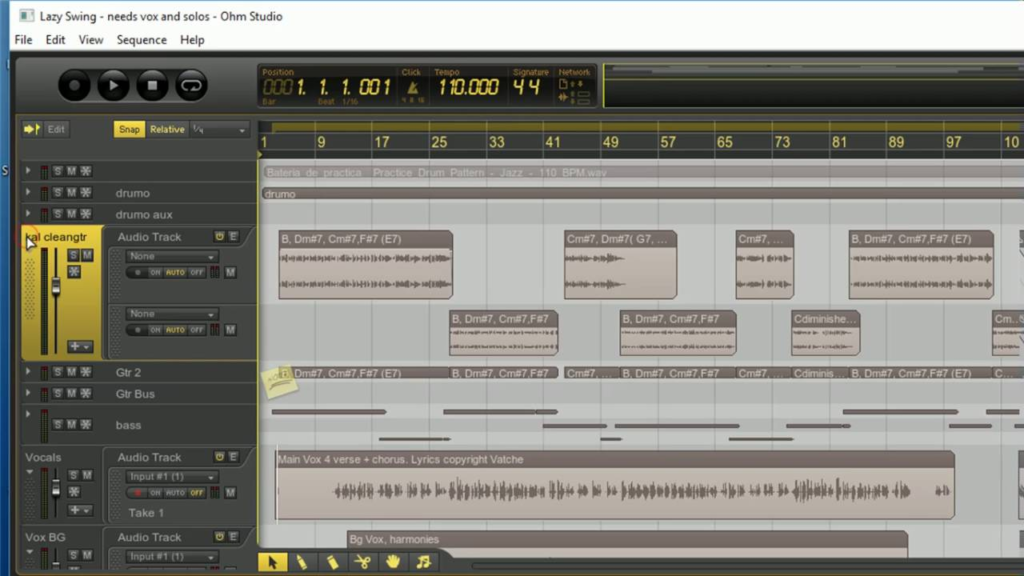
This comprehensive guide explores everything you need to know about Ohm Studio—its innovative features, its impact on the music production community, its professional-grade audio engine, and the various pricing tiers that unlock its full potential. Whether you are a solo artist looking to connect with other musicians, a band seeking to streamline your creative process, or a producer wanting to collaborate with talent across the globe, understanding Ohm Studio’s capabilities could fundamentally change how you approach music creation.
Chapter 1: The Dawn of Collaborative Music Production
Breaking the Geographic Barrier
Before Ohm Studio, remote collaboration in music was a fragmented and often frustrating experience. Musicians would typically resort to emailing large audio files back and forth, struggling with version control, inconsistent sound quality, and the inability to work on a project simultaneously. While cloud storage services like Dropbox and Google Drive offered some relief, they were merely passive storage solutions that did not address the core need for interactive, real-time creativity.
Ohm Studio changed this paradigm by integrating collaboration directly into the DAW itself . The platform functions as both a professional audio workstation and a social network for musicians, creating an ecosystem where creativity can flow freely across continents . Users can browse public projects, listen to works in progress, join existing collaborations, or invite others to participate in their own productions. This community-centric approach transforms music production from a solitary pursuit into a shared, dynamic experience.
A New Kind of Music Community
The social dimension of Ohm Studio is one of its most compelling features. It functions as a “global meeting place” where musicians can learn from one another, share inspiration, and collaborate on projects ranging from simple demos to full commercial productions . This community aspect is not an afterthought but is woven into the very fabric of the software.
Open a project in Ohm Studio, and you gain access to a world of musical possibility. You can explore other users’ creations, offer feedback, and even contribute your own parts to existing tracks. This collaborative ecosystem is particularly valuable for:
- Learning and Development: Aspiring producers can observe how more experienced musicians structure their projects, apply effects, and mix their tracks. This transparency provides an unparalleled learning opportunity.
- Expanding Creative Networks: Musicians can connect with artists they would never have met otherwise, opening doors to new genres, styles, and influences.
- Overcoming Creative Blocks: Engaging with other creators’ work can spark new ideas and provide the fresh perspective needed to overcome writer’s block or production stagnation.
Chapter 2: Professional-Grade Features for Serious Production
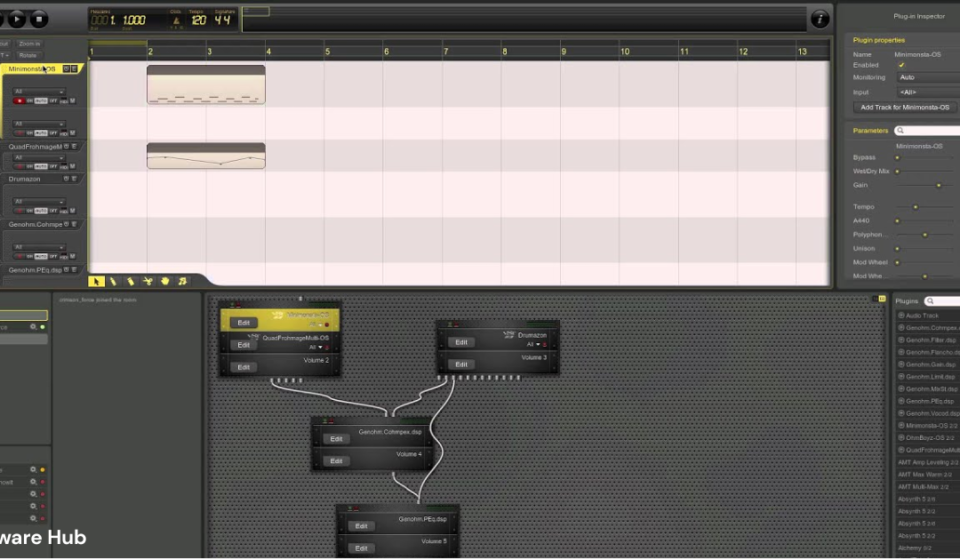
While Ohm Studio’s collaborative capabilities are its headline feature, it does not compromise on professional audio quality or functionality. The DAW is built on a robust, professional-grade audio engine that supports the technical demands of modern music production .
Pro-Grade Audio Engine
At the heart of Ohm Studio lies a high-performance audio engine designed for low-latency recording and pristine sound quality. It supports:
- High-Resolution Audio: Up to 24-bit, 96kHz audio, ensuring that recordings capture the full fidelity and nuance of performances .
- Full MIDI Integration: Comprehensive MIDI support allows musicians to record, edit, and sequence virtual instruments and external hardware with precision .
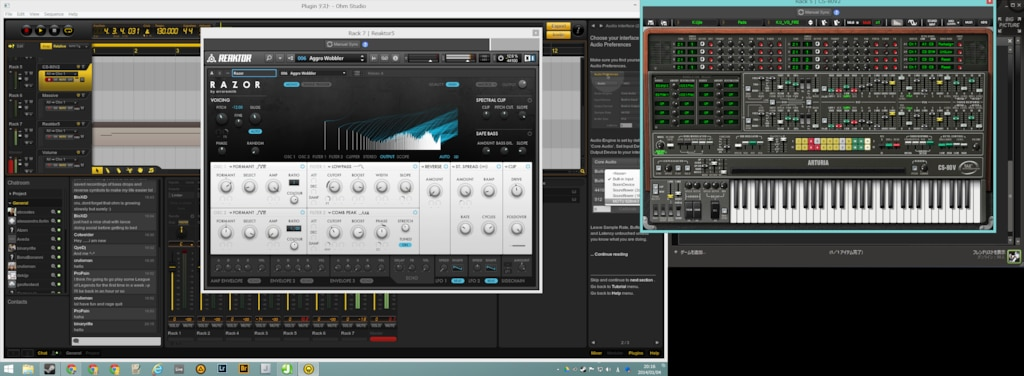
- VST Plugin Compatibility: The DAW supports standard VST plugins, allowing users to incorporate their favorite third-party effects and virtual instruments .
- Unlimited Tracks: Users can create projects with an unlimited number of audio and MIDI tracks, providing the flexibility to build complex arrangements .
Advanced Production Capabilities
Ohm Studio offers a suite of professional features that place it on par with more traditional DAWs:
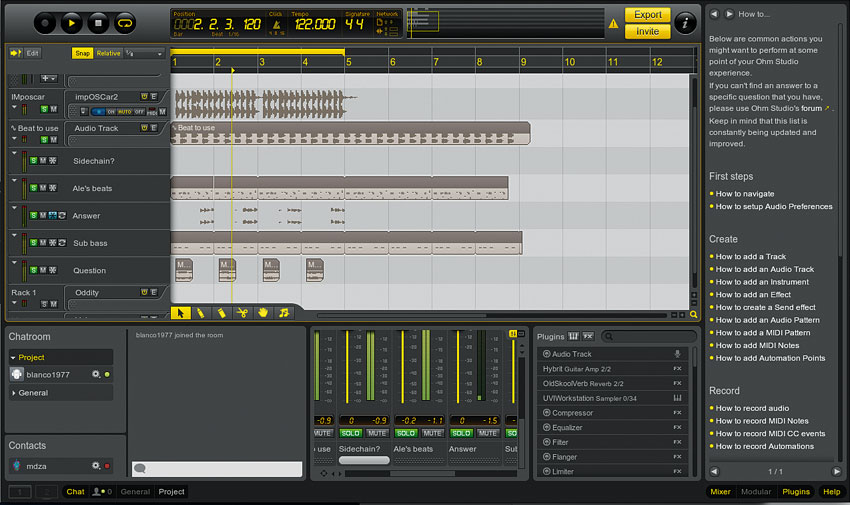
- Full Audio Routing: Flexible routing options allow for complex signal chains, submixes, and effects processing .
- Comprehensive Automation: Users can automate virtually every parameter, from volume and pan to plugin settings, enabling dynamic and expressive mixes .
- State-of-the-Art User Interface: The UI is designed for speed and efficiency, with what is described as “unmatched edition in context.” This means that project navigation and composition are exceptionally fast and intuitive .
- Built-in Effects and Instruments: Ohm Studio comes with a substantial library of high-quality effects and instruments developed in partnership with industry leaders like Voxengo, Poulyn, and GForce . This includes:
- Ohmicide: Melohman: A powerful multi-band distortion plugin .
- OhmBoyz: A versatile multi-tap delay .
- Frohmage, Quad Frohmage, and Mobilohm: A range of filtering and phasing effects .
- Minimonsta: Melohman: A virtual analog synthesizer .
- Oddity: A synth inspired by classic hardware .
- Extensive Sound Library: The included UVI workstation “Ohm Plug” provides a vast collection of sampled instruments and sounds, ensuring that users have high-quality resources at their fingertips from the start .
Chapter 3: The Ohm Studio Ecosystem and Pricing Model
Ohm Studio is available in a tiered model, designed to accommodate everyone from hobbyists experimenting with their first collaborations to professionals demanding the highest audio quality.
The Free Version: A Powerful Starting Point
The free version of Ohm Studio offers a substantial introduction to its collaborative capabilities, limited to 10 cloud-based projects . It includes:
- 16-bit Audio Recording: This provides good quality for demos and basic collaboration.
- Compressed Audio Export: Projects can be exported in formats like MP3, which are suitable for sharing online.
- Basic Effects and Instruments: Users have access to a core selection of built-in effects and the UVI Ohmplug instrument.
- Full Collaborative Features: Crucially, all the social and collaborative features are available in the free version, allowing users to connect with others and contribute to projects .
Ohm Studio Pro: Unlocking Full Professional Quality
For musicians and producers who require uncompromising quality for commercial work, Ohm Studio Pro provides a significant upgrade :
- 24-bit Audio Recording: This delivers studio-grade dynamic range and depth.
- Uncompressed WAVE Export: Users can export their projects in WAV format for professional distribution and mastering.
- Exclusive Plugins: Pro includes the OhmBoyz Delay and the Minimonsta Synth as native Ohm Studio plugins .
Ohm Studio Pro XL: The Ultimate Package
Ohm Studio Pro XL represents the full Ohm Force experience :
- All Ohm Force Plugins: This tier includes the complete suite of Ohm Force plugins, such as the highly regarded Ohmicide multi-band distortion and Predatohm, native to the platform . It’s important to note that these plugins are exclusive to the Ohm Studio environment and cannot be used in other DAWs .
Ohm Cloud: Expanding Your Project Capacity
To manage the collaborative aspect, Ohm Cloud subscriptions allow users to host up to 200 active projects in their Ohm Studio account, billed on a recurring monthly basis . This is essential for active professionals and prolific creators.
Chapter 4: The Impact on Music Creation
Ohm Studio’s arrival signaled a shift in how music could be conceived and produced, moving beyond the individual workstation into a networked, collaborative model.
Addressing Common Pain Points
The platform effectively addresses several long-standing challenges in music collaboration:
- Time Zone and Scheduling Issues: Musicians no longer need to coordinate their schedules rigidly. They can work on projects in their own time, with changes seamlessly synchronized to the cloud for other collaborators to review and enhance .
- Version Control Nightmares: By providing a single, unified project file in the cloud, Ohm Studio eliminates the confusion of multiple versions being sent via email.
- Plugin Compatibility: The “collaborative freeze” feature allows a user to freeze a track that uses a specific plugin, rendering it as audio. This means collaborators can hear the intended sound without needing to own the same plugins .
The Future of Music Production
While Ohm Studio was a pioneer, the concept of collaborative DAWs has since gained traction, with other platforms and plugins exploring similar functionality. However, Ohm Studio’s approach—combining a professional DAW with a social network—remains a unique proposition. It champions the idea that music is inherently a collaborative art form and provides the technological infrastructure to make that collaboration as frictionless as possible.
Chapter 5: Technical Requirements and Platform Support
Understanding the system requirements for Ohm Studio is crucial for ensuring optimal performance and compatibility.
Windows Requirements
- Minimum:
- OS: Windows XP Service Pack 2 or later .
- Processor: Pentium 4 or Athlon 64 .
- Memory: 2 GB RAM .
- Graphics: 9-year-old graphics card or better .
- DirectX: Version 9.0c .
- Network: Broadband internet connection (critical for collaboration) .
- Storage: 400 MB available space .
- Sound Card: DirectX/MME compatible sound card .
- Recommended:
- OS: Windows 7 .
- Processor: Pentium 4 or Athlon 64 .
- Memory: 4 GB RAM .
- Graphics: 3-year-old graphics card or better .
- DirectX: Version 9.0c .
- Network: Broadband internet connection .
- Storage: 2 GB available space .
- Sound Card: ASIO compatible sound card for low-latency performance .
Important Note: As of January 1, 2024, the Steam client, which is used to distribute Ohm Studio, only supports Windows 10 and newer versions . This does not necessarily mean Ohm Studio cannot run on older versions of Windows, but the platform for obtaining and updating it may be limited.
macOS Requirements
- Minimum:
- OS: MacOS 10.5.8 .
- Processor: Intel Processor .
- Memory: 2 GB RAM .
- Graphics: Integrated Intel graphics .
- Network: Broadband internet connection .
- Storage: 400 MB available space .
- Sound Card: Integrated sound card .
- Recommended:
- OS: MacOS 10.5.8 or later .
- Processor: Intel Processor .
- Memory: 4 GB RAM .
- Graphics: Original graphics card or better .
- Network: Broadband internet connection .
- Storage: 2 GB available space .
- Sound Card: CoreAudio compatible sound card .
Important Note: As of February 15, 2024, the Steam client no longer supports 32-bit games or macOS 10.14 or lower . This is a significant consideration for users with older Mac hardware.
Chapter 6: Ohm Studio’s Legacy and Influence
Ohm Studio was more than just a piece of software; it was a vision for the future of music creation. Its development by Ohm Force, a company already respected in the audio plugin community, lent it credibility. The inclusion of their renowned effects as native tools within the DAW was a significant draw for producers already familiar with their high-quality sound.
The Risk of Obsolescence
Despite its forward-thinking concept, Ohm Studio faces the reality that all software must confront: the march of technology and platform changes. The cessation of support for 32-bit applications and older macOS versions by platforms like Steam presents a challenge for legacy users. Projects created in older versions may not be compatible with future hardware or software updates, a common problem in the digital audio world.
A Valuable Lesson in Collaboration
Regardless of its current commercial status, Ohm Studio’s core innovation remains a valuable lesson for the music industry. It proved that real-time, high-quality collaboration over the internet is not just a pipe dream but a technically achievable reality. Its emphasis on community and shared creativity influenced subsequent developments in music software and sparked interest in remote music production workflows.
Conclusion: The Dawn of a New Era in Music Production
Ohm Studio stands as a monument to innovation in the digital audio world. It was the first DAW to successfully integrate a professional-grade audio engine with a real-time collaborative network, creating a virtual studio where distance was no longer a barrier to musical collaboration . It offered a powerful platform where musicians could not only produce high-quality audio but also learn from each other, share ideas, and build a community around their shared passion.
While the technical landscape has evolved, the core principles of Ohm Studio remain relevant and inspiring. It challenged the notion of music production as a solitary activity and championed the idea that creativity flourishes when it is shared. For those who experienced it during its peak, Ohm Studio was more than just software; it was a gateway to a global community of artists, a testament to the power of technology to bring people together, and a glimpse into a future where making music is a truly borderless endeavor.
Frequently Asked Questions (FAQs)
1. What makes Ohm Studio different from other digital audio workstations like Ableton Live or FL Studio?
Ohm Studio’s primary differentiator is its built-in real-time collaboration. While other DAWs are primarily designed for solo creation, Ohm Studio was built from the ground up for online collaboration, allowing multiple users to work on the same project simultaneously from different locations . It also functions as a social network, enabling users to find collaborators and share projects easily.
2. Is Ohm Studio completely free to use, or are there paid versions?
Ohm Studio offers a free version that is a great starting point for musicians. It allows for collaboration, 16-bit recording, and compressed audio export . To unlock the full professional capabilities, including 24-bit recording and uncompressed WAV export, you need to upgrade to Ohm Studio Pro . A more comprehensive Ohm Studio Pro XL version is also available, which includes a full suite of Ohm Force plugins .
3. Can I use my own VST plugins with Ohm Studio?
Yes, Ohm Studio supports standard VST plugins . This means you can use your favorite third-party virtual instruments and effects within the DAW, ensuring that your creative tools are not limited. However, you may need to “freeze” tracks using specific VSTs so that collaborators without those plugins can hear the intended audio .
4. What is the “Ohm Cloud” and why would I need it?
The Ohm Cloud is a subscription service that expands your account’s project capacity, allowing you to host up to 200 active projects in the cloud . The free version comes with a limit (e.g., 10 projects). If you are an active, prolific creator or professional who works on many projects simultaneously, subscribing to Ohm Cloud is essential to manage your workload .
5. Will Ohm Studio work on my older Mac or Windows computer?
Ohm Studio is a legacy application with specific system requirements. It officially supports older operating systems like Windows XP and macOS 10.5.8 . However, modern distribution platforms like Steam no longer support these older systems. As of early 2024, the Steam client officially requires Windows 10 or newer and macOS 10.15 (Catalina) or newer, which means users on very old hardware may not be able to install or update the software via Steam .